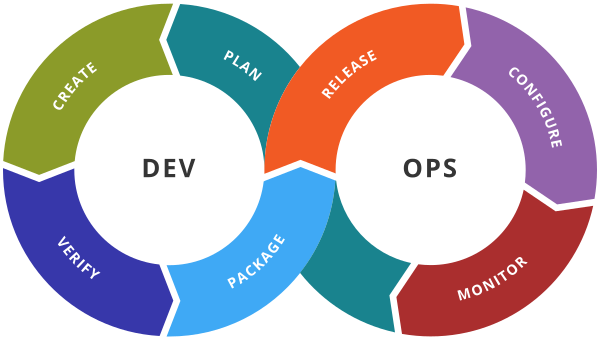

Azure DevOps is Microsoft’s all-in-one DevOps platform: work tracking, Git hosting, CI/CD pipelines, package feeds and test management in one product, hosted at dev.azure.com or on-premises as Azure DevOps Server. It is the default in organisations that run on Microsoft technology and in many enterprises with strict governance needs, and it remains fully supported alongside GitHub in 2026. This page is the hub of our Azure DevOps series: it presents the five services, gets you to a working pipeline in ten minutes, compares Azure DevOps with GitHub, and orders the 30+ tutorials of the series into a learning path that also maps to the AZ-400 certification.
Prerequisites: a Microsoft account (free), Git basics from our Git series, and for the Azure deployment tutorials an Azure subscription (free trial or Visual Studio credits).
The five services
| Service | What it does | Tutorials |
|---|---|---|
| Azure Boards | Work items, backlogs, sprints, Kanban boards, dashboards; Agile, Scrum, Basic and CMMI process templates | Azure Boards, Boards lab, Sprint lab, Agile terminology |
| Azure Repos | Unlimited private Git repositories, pull requests, branch policies, code search (TFVC still supported) | Azure Repos |
| Azure Pipelines | CI/CD as YAML: build, test and deploy to any cloud or on-prem, with Microsoft-hosted or self-hosted agents | CI/CD pipeline, Azure Pipeline, Pipeline from GitHub |
| Azure Artifacts | Package feeds for NuGet, npm, Maven, Python and Universal Packages, with upstream sources | covered in the pipeline tutorials |
| Azure Test Plans | Manual and exploratory testing, test cases linked to work items (paid add-on) | — |
Above them sit the Organization (billing, users, agent pools, policies) and Projects (a boundary for repos, boards and pipelines). Users authenticate with Microsoft Entra ID or Microsoft accounts and are licensed as Basic, Stakeholder (free, boards only) or Basic + Test Plans; the first five Basic users are free.
Ten-minute quick start: organization, project, first pipeline
- Go to dev.azure.com, sign in and click New organization; pick a name and a region close to your users (Canada Central for Québec).
- Create a project: name
devops-lab, visibility Private, version control Git, work item process Agile. - Open Repos, click Initialize with a README, then Clone to your machine.
- Add the file below at the repository root and push it.
# azure-pipelines.yml
trigger:
  branches:
    include: [main]

pool:
  vmImage: ubuntu-latest          # Microsoft-hosted agent

variables:
  pythonVersion: '3.13'

stages:
  - stage: Build
    jobs:
      - job: Test
        steps:
          - task: UsePythonVersion@0
            inputs:
              versionSpec: $(pythonVersion)

          - script: |
              python -m pip install --upgrade pip pytest
              pytest --junitxml=results.xml || true
            displayName: Run unit tests

          - task: PublishTestResults@2
            inputs:
              testResultsFiles: results.xml
              testRunTitle: Python $(pythonVersion)

          - script: echo "Build $(Build.BuildNumber) from $(Build.SourceBranchName) on $(Agent.OS)"
            displayName: Show pipeline variables

  - stage: Deploy
    dependsOn: Build
    condition: and(succeeded(), eq(variables['Build.SourceBranch'], 'refs/heads/main'))
    jobs:
      - deployment: DeployDev
        environment: dev              # created automatically; add approvals later
        strategy:
          runOnce:
            deploy:
              steps:
- script: echo "Deploying to dev"- Open Pipelines → New pipeline → Azure Repos Git → devops-lab → Existing Azure Pipelines YAML file, select
azure-pipelines.yml, click Run. - Watch the two stages run; open the Tests tab to see the published results and Environments to see the deployment recorded on
dev.
New organizations must request the free parallelism grant (1 800 minutes/month on Microsoft-hosted agents) or register a self-hosted agent; until then jobs show “No hosted parallelism has been purchased or granted”.
Azure DevOps vs GitHub (both Microsoft, 2026)
| Azure DevOps | GitHub | |
|---|---|---|
| Work tracking | Boards: hierarchical backlogs, sprints, capacity, queries, dashboards | Issues + Projects: lighter, developer-centric |
| CI/CD | Pipelines: stages, environments with approvals/checks, deployment groups, classic releases | Actions: huge marketplace, environments with reviewers |
| Governance | Fine-grained permissions, area paths, process customisation, on-prem server | Organisation rulesets, enterprise features, GHES on-prem |
| Open source / community | Small | The world’s largest |
| AI | Copilot integrations arriving; GitHub Advanced Security for Azure DevOps | Copilot everywhere |
| Direction | Maintained and updated; new investment focuses on GitHub | Microsoft’s primary developer platform |
A common 2026 pattern is code on GitHub, pipelines and boards in Azure DevOps, connected through the Azure Boards GitHub app and GitHub service connections; our Azure Pipeline using GitHub tutorial shows it.
The learning path
1. Foundations and organisation
- SDLC and DevOps introduction and Agile terminology.
- Azure DevOps tools and project processes (Agile, Scrum, Basic, CMMI).
- Organization configuration, projects, users and permissions, teams.
- Microsoft Entra ID (Azure AD) and adding directory users.
2. Boards and Repos
- Azure Boards, Boards lab, Sprint lab.
- Git refresher, then Azure Repos: branches, pull requests, branch policies.
3. Pipelines
- CI/CD concepts and your first Azure Pipeline.
- Pipelines from a GitHub repository.
- Microsoft-hosted agents vs self-hosted agents on Linux.
- Jenkins with Azure Repos for hybrid setups.
4. Releases and infrastructure
- Release pipelines overview and deploying a web app with approvals and gates.
- ARM templates and Bicep for infrastructure as code.
5. Monitoring and certification
- Azure Monitor overview, metrics, activity logs, alerts.
- Azure certifications: AZ-900 as a base, then AZ-400 Designing and Implementing Microsoft DevOps Solutions, whose domains match sections 1–5 above.
Core practices the series teaches
- Everything as code: pipelines in YAML next to the application, infrastructure in Bicep/ARM or Terraform, policies versioned.
- Branch policies on main: required reviewers, linked work items, build validation, no direct pushes.
- Environments with checks: approvals, business hours, Azure Monitor gates before production.
- Least privilege: service connections with workload identity federation instead of secrets, PATs scoped and short-lived, agent pools authorised per pipeline.
- Templates: shared YAML templates in a central repo, enforced with the Required template check.
- Traceability: commits → pull requests → work items → builds → releases, all linked automatically.
Pricing in one paragraph
Azure DevOps Services is free for the first five Basic users and unlimited Stakeholders, with one free Microsoft-hosted parallel job (1 800 minutes/month) and one free self-hosted job. Beyond that: about 6 USD per additional Basic user per month, about 40 USD per extra Microsoft-hosted parallel job, about 15 USD per extra self-hosted job, 2 GB of Artifacts storage free then per-GB pricing. Visual Studio subscribers get Basic access included. Public projects get ten free hosted jobs.
FAQ
Is Azure DevOps being retired? No. Microsoft continues to ship features (YAML improvements, Entra ID integration, GitHub Advanced Security for Azure DevOps) and publishes a roadmap; only classic pipeline features are frozen in favour of YAML.
Can I deploy to AWS or on-prem? Yes. Pipelines are cloud-agnostic; the AWS Toolkit for Azure DevOps and self-hosted agents inside your network cover both cases.
YAML or classic editor? YAML. Classic build and release pipelines still work, but templates, checks and most new features are YAML-only, and YAML lives in Git with your code.
Key takeaways
- Azure DevOps = Boards + Repos + Pipelines + Artifacts + Test Plans under one organization.
- Start with an organization, a project, a Git repo and a YAML pipeline; add environments and approvals as you grow.
- Azure DevOps excels at governance and work tracking; GitHub at community and AI; the two integrate well.
- Follow the path: foundations → Boards/Repos → Pipelines → releases and IaC → monitoring and AZ-400.
Start the series
Begin with Azure DevOps tools and organization configuration. Official docs: What is Azure DevOps?, Azure Pipelines get started.
Retour parcours Azure DevOps — hub de la série et leçons sœurs.