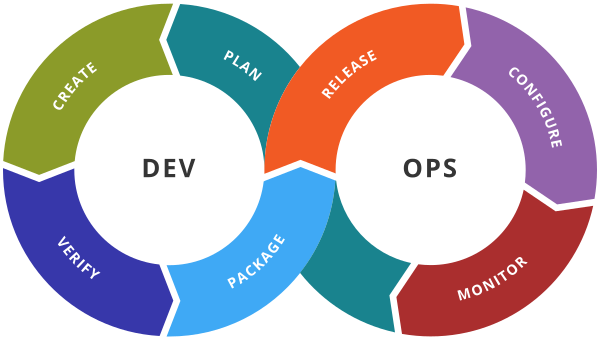
Every tool on this site — Docker, Kubernetes, Terraform, Ansible, Jenkins — runs on Linux and is driven from a shell. This hub gathers the lessons where you actually work on a Linux server: installing packages, managing services with systemd, editing configuration files, opening ports and connecting over SSH.
Use it as a practical Linux course by example. The installation labs below are ordered from the simplest (Git, Docker) to the most involved (a Kubernetes control plane with kubeadm, a Nagios monitoring server compiled from source). Each one exercises a different part of the system: package repositories and GPG keys, users and groups, file permissions, networking and firewall rules, logs and troubleshooting.
A dedicated Linux fundamentals series (file system, permissions, processes, bash scripting, networking commands) is being written and will be published here. Until then, the labs below are the fastest way to become comfortable on the command line.
Recommended environment: Ubuntu 22.04/24.04 LTS or Rocky Linux 9 in a virtual machine (Vagrant lesson) or on a cloud instance (EC2 lesson).
How to use this hub. Lessons are ordered as a learning path: start at 01 and follow the arrows, or jump to any chapter. 12 lessons, free, no account required.
Learning path
Lab environments
Installation labs on Linux
- Install Git
- Install Docker
- Install Ansible
- Install Terraform and the AWS CLI
- Install Jenkins
- Install Puppet server and agent
- Install Nagios from source
- Install NRPE agent
- Install Kubernetes with kubeadm
- OS upgrades within a Kubernetes cluster